
UpBrightSkills

Learn. Build. Evolve.

Menu
  • AWS
  • Linux
  • IT Security
  • Wazuh
  • Windows
  • Docker
Menu

Category: Linux

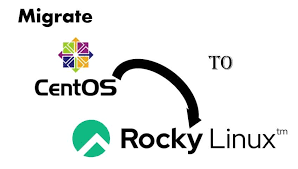
Migrate From CentOS 8 to Rocky Linux 8

Posted on June 25, 2021February 2, 2024 by Admin

Rocky Linux 8 is one to one RHEL binary compatible Linux OS, its latest stable release 8.4 has been released. Thus, if you want to migrate from CentOS 8 to Rocky Linux, then here is the tutorial using the official migrate2rocky script.

Steps to migrate CentOS 8 to Rocky Linux 8

Before performing the below CentOS 8 to Rocky migration commands, make sure you have a backup for your system. Because many times few applications might not work after migration, thus, it would be a wise idea to take a full system snapshot.

1. Run system update & upgrade

The first thing we have to perform is to ensure that all the packages installed on our existing CentOS 8 are up to date and have their latest version. For this run the system update and upgrade command using DNF package manager.

sudo dnf update && sudo dnf upgrade

2. Migrate CentOS to Rocky using Script

Rocky developers have created a script called  migrate2rocky available on the Github page of this Linux. Let’s download it on the existing CentOS system that we want to convert.

wget https://raw.githubusercontent.com/rocky-linux/rocky-tools/main/migrate2rocky/migrate2rocky.sh

3. Change Script Permission

Change the permission of the downloaded script, so that we can execute it on our Linux operating system.

sudo chmod +x migrate2rocky.sh

4. Execute Script

The script will automatically change the CentOS 8 Linux repositories, GPG keys, logo, and other things to Rocky Linux. It may take some time depending upon your existing system size.

sudo bash migrate2rocky.sh -r

Once the migration is completed, you will get:

Done, please reboot your system.
A log of this installation can be found at /var/log/migrate2rocky.log

Now, sync the command and then simply reboot your system.

sudo dnf distro-sync -y 
sudo reboot

5. Verify & Check OS Version

To confirm you have successfully migrated to Rocky Linux, let’s check the OS version.

cat /etc/os-release
magento

Install Magento on Ubuntu 18.04 with Nginx & Lets Encrypt Certificate

Posted on June 25, 2020February 2, 2024 by Admin

Magento open source is a fantastic platform. Get your stores online with Magento Setup. This tutorial you to setup Magento with high performance Web Server – Nginx and secure the same with Lets Encrypt SSL Certificate.

Pre-Requisites
  • Server with Ubuntu – 18.0.4
  • SSH – Enabled
  • HTTP & HTTPS Ports enabled and should be accessible over the Web
SSH to your instance and let’s update and install dependencies, MySQL and Nginx
sudo apt update && sudo apt upgrade
sudo apt install unzip certbot
sudo apt-get -y install nginx
sudo apt install mysql-server
Let secure the Database & Create your DB Root Password
sudo mysql_secure_installation
Login to MySQL command line and execute the following queries to create database and user for magneto database access
CREATE DATABASE magentodb;

CREATE USER 'magentoadmin'@'localhost' IDENTIFIED BY 'yourpassword';

GRANT ALL PRIVILEGES ON magentodb.* TO ‘magentoadmin’@’localhost';

FLUSH PRIVILEGES;

exit;
Next we want to create the magneto user, group, folder and give correct permissions
sudo useradd -m -U -r -d /opt/magento magento

sudo usermod -a -G magento www-data

mkdir /opt/magento/public_html

sudo chmod 750 /opt/magento
Install PHP dependencies
sudo apt install php7.2-common php7.2-cli php7.2-fpm php7.2-opcache php7.2-gd php7.2-mysql php7.2-curl php7.2-intl php7.2-xsl php7.2-mbstring php7.2-zip php7.2-bcmath php7.2-soap
Configure PHP parameters for Magento requirements
sudo sed -i 's/memory_limit = .*/memory_limit = 2048M/' /etc/php/7.2/fpm/php.ini

sudo sed -i 's/upload_max_filesize = .*/upload_max_filesize = 256M/' /etc/php/7.2/fpm/php.ini

sudo sed -i 's/zlib.output_compression = .*/zlib.output_compression = on/' /etc/php/7.2/fpm/php.ini

sudo sed -i 's/max_execution_time = .*/max_execution_time = 18000/' /etc/php/7.2/fpm/php.ini

sudo sed -i 's/;date.timezone.*/date.timezone = UTC/' /etc/php/7.2/fpm/php.ini

sudo sed -i 's/;opcache.save_comments.*/opcache.save_comments = 1/' /etc/php/7.2/fpm/php.ini
Now we will create PHP Magento Config File
vim /etc/php/7.2/fpm/pool.d/magento.conf

user = magento
group = www-data
listen.owner = magento
listen.group = www-data
listen = /var/run/php/php7.2-fpm-magento.sock
pm = ondemand
pm.max_children = 50
pm.process_idle_timeout = 10s
pm.max_requests = 500
chdir = /
Restart PHP FPM to reload the config
sudo systemctl restart php7.2-fpm
Now Let’s Download and Install composer
curl -sS https://getcomposer.org/installer -o composer-setup.php

php composer-setup.php --install-dir=/usr/local/bin --filename=composer
For better security, we want to generate a Diffie-Hellman parameters strong enough
sudo openssl dhparam -out /etc/ssl/certs/dhparam.pem 4096
Now let us install Magento via the composer method
sudo su — magento

composer create-project — repository-url=https://repo.magento.com/ magento/project-community-edition /opt/magento/public_html

cd ~/public_html

php bin/magento setup:install --base-url=https://yourwebsite.com/ --base-url-secure=https://mywebsite.com/ --admin-firstname=FirstName --admin-lastname=LastName --admin-email="[email protected]" --admin-user=admin --admin-password="youradminpassword" --db-host=localhost --db-name=magentodb --db-user=magentoadmin --db-password=yourdbpassword --currency=USD --timezone=America/Chicago --use-rewrites=1

php ~/public_html/bin/magento cron:install
Create Config File
sudo vim /etc/nginx/sites-available/mywebsite.com
Add below mentioned configuration in above mentioned file “mywebsite.com”
upstream fastcgi_backend {
    server unix:/var/run/php/php7.2-fpm-magento.sock;
}
server {
    listen 80;
    server_name mywebsite.com;
    include snippets/letsencrypt.conf;
    return 301 https://mywebsite.com$request_uri;
}
server {
    listen 443 ssl http2;
    server_name mywebsite.com;
    ssl_certificate /etc/letsencrypt/live/mywebsite.com/fullchain.pem;
    ssl_certificate_key /etc/letsencrypt/live/mywebsite.com/privkey.pem;
    ssl_trusted_certificate /etc/letsencrypt/live/mywebsite.com/chain.pem;
    ssl_dhparam /etc/ssl/certs/dhparam.pem;
    ssl_session_timeout 1d;
    ssl_session_cache shared:SSL:50m;
    ssl_session_tickets off;
    ssl_protocols TLSv1 TLSv1.1 TLSv1.2;
    ssl_ciphers "ECDHE-ECDSA-CHACHA20-POLY1305:ECDHE-RSA-CHACHA20-POLY1305:ECDHE-ECDSA-AES128-GCM-SHA256:ECDHE-RSA-AES128-GCM-SHA256:ECDHE-ECDSA-AES256-GCM-SHA384:ECDHE-RSA-AES256-GCM-SHA384:DHE-RSA-AES128-GCM-SHA256:DHE-RSA-AES256-GCM-SHA384:ECDHE-ECDSA-AES128-SHA256:ECDHE-RSA-AES128-SHA256:ECDHE-ECDSA-AES128-SHA:ECDHE-RSA-AES256-SHA384:ECDHE-RSA-AES128-SHA:ECDHE-ECDSA-AES256-SHA384:ECDHE-ECDSA-AES256-SHA:ECDHE-RSA-AES256-SHA:DHE-RSA-AES128-SHA256:DHE-RSA-AES128-SHA:DHE-RSA-AES256-SHA256:DHE-RSA-AES256-SHA:ECDHE-ECDSA-DES-CBC3-SHA:ECDHE-RSA-DES-CBC3-SHA:EDH-RSA-DES-CBC3-SHA:AES128-GCM-SHA256:AES256-GCM-SHA384:AES128-SHA256:AES256-SHA256:AES128-SHA:AES256-SHA:DES-CBC3-SHA:!DSS";
    ssl_prefer_server_ciphers on;
    ssl_stapling on;
    ssl_stapling_verify on;
    resolver 8.8.8.8 8.8.4.4 valid=300s;
    resolver_timeout 30s;
    keepalive_timeout 300s;
    add_header Strict-Transport-Security "max-age=63072000; includeSubDomains";
	add_header X-Frame-Options SAMEORIGIN;
    add_header X-Content-Type-Options nosniff;
    include snippets/letsencrypt.conf;
    set $MAGE_ROOT /opt/magento/public_html;
    set $MAGE_MODE developer; # or production
    access_log /var/log/nginx/mywebsite.com-access.log;
    error_log /var/log/nginx/mywebsite.com-error.log;
    include /opt/magento/public_html/nginx.conf.sample;
}
Create Link
ln -s /etc/magento/sites-available/mywebsite.com /etc/magento/sites-enabled/
Test, Reload and Restart Nginx Service
nginx -t

sudo service nginx reload

sudo service nginx restart
Now We will secure the same using Let’s Encrypt Certificate. Switch to Root user and perform below mentioned steps
sudo su
mkdir -p /var/lib/letsencrypt/.well-known
chgrp www-data /var/lib/letsencrypt
chmod g+s /var/lib/letsencrypt
Create Config for Letsencrypt
vim /etc/nginx/snippets/letsencrypt.conf

#Add below mentioned content in above conf file.

location ^~ /.well-known/acme-challenge/ {
    allow all;
    default_type “text/plain”;
    rewrite /.well-known/acme-challenge/(.*) /$1 break;
    root /var/lib/letsencrypt/;
    try_files $uri =404;
}
Generate Certificate (Make sure – your web server is reachable using host name). Certificate generated will be valid for 90 Days.
sudo certbot certonly — agree-tos — email [email protected] — webroot -w /var/lib/letsencrypt/ -d mywebsite.com
Create Cron Job to Automatically renew your Lets Encrypt Certificate
vim /etc/cron.d/certbot

0 */12 * * * root abc -x /usr/bin/certbot -a \! -d /run/systemd/system && perl -e ‘sleep int(rand(3600))’ && certbot -q renew — renew-hook “systemctl reload nginx”
Create CRON Job to Automatically renew your Lets Encrypt Certificate
sudo service nginx reload

sudo service nginx restart

Wazuh – Vulnerability Scanning on Windows & Linux

Posted on June 10, 2020February 2, 2024 by Admin

#vulnerability #vulnerabilitydetection #wazuh

How to Setup Vulnerability Scanning – Windows & Linux. Scan for Vulnerabilities and discover the weaknesses of a given system with open source tool Wazuh.
Wazuh is a free, open source and enterprise-ready security monitoring solution for threat detection, integrity monitoring, incident response and compliance.

Feature Like

  • Security Analytics
  • Intrusion Detection
  • Log Data Analysis
  • File Integrity Monitoring
  • Vulnerability Detection
  • Configuration Assessment
  • Incident Response
  • Regulatory Compliance
  • Cloud Security
  • Container Security

Wazuh – https://wazuh.com/
Wazuh Ova Download (Version 3.12) – https://documentation.wazuh.com/3.12/…
Wazuh Agent Download – https://documentation.wazuh.com/3.12/…
Wazuh Setup Video – https://youtu.be/WqQUIz5XRpQ

UpBrightSkills Blogs – https://www.upbrightskills.com/
Go Language Programs – https://www.golangprograms.com/

Automate – Docker Installation

Posted on June 10, 2020February 2, 2024 by Admin
#!/bin/bash

# Note : For Docker Setup

#OS Update:	
sudo apt-get update -y;
sudo apt-get install gdebi -y;
sudo apt-get install vim -y;
sudo apt-get install nano -y;
sudo apt-get install htop -y;

#Install SSH:
sudo apt-get install openssh-server -y;

#Remove Libre Office:
sudo apt-get remove --purge libreoffice* -y;
sudo apt-get clean;
sudo apt-get autoremove;

#Git
sudo add-apt-repository ppa:git-core/ppa;
sudo apt-get update -y;
sudo apt-get install git -y; 

#sudo add-apt-repository ppa:n-muench/programs-ppa2;
sudo add-apt-repository ppa:n-muench/programs-ppa;
sudo apt-get update -y;
sudo apt-get install -y filezilla;	
sudo apt-get install -y sublime-text;
sudo apt-get install -y chromium-browser;

#Essential Pack	
sudo apt-get install -y synaptic vlc gimp gimp-data gimp-plugin-registry gimp-data-extras bleachbit unrar zip unzip;	

#Samba
sudo apt-get install -y samba system-config-samba cifs-utils;

#Docker Installation
sudo curl -fsSL get.docker.com -o get-docker.sh >/tmp/docker
chmod +x /tmp/docker/get-docker.sh
sudo /tmp/docker/get-docker.sh

#Install Docker Machine
sudo curl -L https://github.com/docker/machine/releases/download/v0.14.0/docker-machine-`uname -s`-`uname -m` >/tmp/docker-machine && \
sudo install /tmp/docker-machine /usr/local/bin/docker-machine

#Install Docker Compose
sudo curl -L https://github.com/docker/compose/releases/download/1.20.1/docker-compose-`uname -s`-`uname -m` -o /usr/local/bin/docker-compose
sudo chmod +x /usr/local/bin/docker-compose

For More videos go to – https://www.youtube.com/channel/UCIUmpO3KBHPMtgzMA6p0IhA

Automate Installation – CentOS with Lamp Stack

Posted on June 10, 2020February 2, 2024 by Admin

One Click Installation

This will configure WebServer with up httpd, mysql, ftp, php, samba.

#!/bin/bash

#IPTables
service iptables stop
chkconfig iptables off

#SELinux Disable - Completely
setenforce 0
SELINUX=disabled
sed -i 's/SELINUX= .*/SELINUX= '${SELINUX}'/' /etc/selinux/config

#Update
yum insall -y update
yum install -y upgrade

#Install httpd
yum install -y httpd
service httpd start
chkconfig httpd on

#Install MySQL Server 5.7
wget https://dev.mysql.com/get/mysql57-community-release-el6-11.noarch.rpm
rpm -ivh mysql57-community-release-el6-11.noarch.rpm
yum clean all
yum install -y mysql mysql-server php-mysql
service mysqld start
chkconfig mysqld on

#Add EPEL Repository
wget http://dl.fedoraproject.org/pub/epel/6/x86_64/epel-release-6-8.noarch.rpm
rpm -ivh epel-release-6-8.noarch.rpm

#Install PHP
yum install -y php php-gd php-mysql php-mcrypt

#Create info.php
cat << EOF > /var/www/html/info.php;

EOF

#HTTPD php.ini - /etc/php.ini
max_execution_time=18000
memory_limit=2048M
upload_max_filesize=32M
sed -i.orignal 's/memory_limit = .*/memory_limit = '${memory_limit}'/' /etc/php.ini
sed -i 's/max_execution_time = .*/max_execution_time = '${max_execution_time}'/' /etc/php.ini
sed -i 's/upload_max_filesize = .*/upload_max_filesize = '${upload_max_filesize}'/' /etc/php.ini

#Install and Configure FTP
yum install -y vsftpd
service	vsftpd start
chkconfig vsftpd on

#Change Owner of HTML Folder (This is for the permission to FTP and Samba)
chown -R ftp_user:ftp_users /var/www/html

#FTP Config vsftpd.conf - /etc/vsftpd/vsftpd.conf (Change configuration file directly with SED Command)
sed -i.orignal 's/anonymous_enable=YES/anonymous_enable=NO /etc/vsftpd/vsftpd.conf
sed -i 's/local_enable=YES/local_enable=NO/' /etc/vsftpd/vsftpd.conf

#FTP User
useradd -s /sbin/nologin -d /var/www/html ftp_user
groupadd ftp_users
usermod -aG ftp_users ftp_user
chown -R root:ftp_users /var/www/html
passwd ftp_user

#Samba configuration (Optional - If required can be installed)
yum install -y samba samba-client samba-common
service smb start
mv /etc/samba/smb.cnf /etc/samba/smb.cnf.bak
chkconfig smb on
echo -e "path= /var/www/html/ \npublic=no \nbrowsable = no \nwritable = yes \nprintable = no \write list = @ftp_users" >> /etc/samba/smb.conf
service smb restart
smbpasswd -a ftp_user

For More videos go to – https://www.youtube.com/channel/UCIUmpO3KBHPMtgzMA6p0IhA

Automate Installation – Ubuntu with JDK & Tomcat

Posted on June 10, 2020February 2, 2024 by Admin

Update OS and Install required packages


apt-get update -y;
apt-get install gdebi -y;
apt-get install vim -y;
apt-get install nano -y;
apt-get install htop -y;
apt-get install unzip -y;
apt-get install python -y;

Install JDK

apt-get install default-jdk -y;
add-apt-repository ppa:webupd8team/java -y;
apt-get update -y;

Install Mysql | Kindly update password


sudo debconf-set-selections <<< 'mysql-server-5.7 mysql-server/root_password password password' 
sudo debconf-set-selections <<< 'mysql-server-5.7 mysql-server/root_password_again password password' 
apt-get -y install mysql-server-core-5.7 mysql-server-5.7 mysql-client-5.7;
service mysql start;

Install AWS CLI on Linux


curl "https://s3.amazonaws.com/aws-cli/awscli-bundle.zip" -o "awscli-bundle.zip"
unzip awscli-bundle.zip
./awscli-bundle/install -i /usr/local/aws -b /usr/local/bin/aws

Tomcat Installation (Update the Version which is required by your application)


groupadd tomcat
useradd -s /bin/false -g tomcat -d /opt/tomcat tomcat
cd /tmp/
curl -O http://redrockdigimark.com/apachemirror/tomcat/tomcat-8/v8.5.30/bin/apache-tomcat-8.5.30.tar.gz 
mkdir /opt/tomcat
tar xzvf apache-tomcat-8.5.30.tar.gz -C /opt/tomcat --strip-components=1
cd /opt/tomcat 
chgrp -R tomcat /opt/tomcat
chmod -R g+r conf
chmod g+x conf
chown -R tomcat webapps/ work/ temp/ logs/
update-java-alternatives -l

Create Service for Tomcat


touch /etc/systemd/system/tomcat.service
cd /etc/systemd/system/

Service File Update (File – /etc/systemd/system/tomcat.service)


cat <> tomcat.service;
[Unit]
Description=Apache Tomcat Web Application Container
After=network.target

[Service]
Type=forking

Environment=JAVA_HOME=/usr/lib/jvm/java-1.8.0-openjdk-amd64/jre
Environment=CATALINA_PID=/opt/tomcat/temp/tomcat.pid
Environment=CATALINA_HOME=/opt/tomcat
Environment=CATALINA_BASE=/opt/tomcat
Environment='CATALINA_OPTS=-Xms512M -Xmx1024M -server -XX:+UseParallelGC'
Environment='JAVA_OPTS=-Djava.awt.headless=true -Djava.security.egd=file:/dev/./urandom'

ExecStart=/opt/tomcat/bin/startup.sh
ExecStop=/opt/tomcat/bin/shutdown.sh

User=tomcat
Group=tomcat
UMask=0007
RestartSec=10
Restart=always

[Install]
WantedBy=multi-user.target
EOF

Start Service


systemctl daemon-reload
systemctl start tomcat
systemctl enable tomcat

Add User for Tomcat Manager (Change your Username and Password as per your needs)


sed -i '22i\' /opt/tomcat/conf/tomcat-users.xml

Allow IP Address for Accessing Tomcat Manager App


cp /opt/tomcat/webapps/manager/META-INF/context.xml /opt/tomcat/webapps/manager/META-INF/context.orignal.xml
cp /opt/tomcat/webapps/host-manager/META-INF/context.xml /opt/tomcat/webapps/host-manager/META-INF/context.original.xml

Delete line number 19 to 21 (File – /opt/tomcat/webapps/manager/META-INF/context.xml)


sed -i '18,20d' /opt/tomcat/webapps/manager/META-INF/context.xml

Add below lines in between i.e 19,20 and 21 number. (File – /opt/tomcat/webapps/manager/META-INF/context.xml)


sed -i '18i\' /opt/tomcat/webapps/manager/META-INF/context.xml
sed -i '19i\'  /opt/tomcat/webapps/manager/META-INF/context.xml #kindly update IP Address

Delete line number 19 to 21 (File – /opt/tomcat/webapps/host-manager/META-INF/context.xml)


sed -i '18,20d' /opt/tomcat/webapps/host-manager/META-INF/context.xml

Add below lines in between i.e 18,19 and 20 number. (File – /opt/tomcat/webapps/host-manager/META-INF/context.xml)


sed -i '18i\' /opt/tomcat/webapps/host-manager/META-INF/context.xml
sed -i '19i\'  /opt/tomcat/webapps/host-manager/META-INF/context.xml #kindly update IP Address

Remove version string from HTTP error messages


cd /opt/tomcat/lib
jar xf catalina.jar /opt/tomcat/lib/org/apache/catalina/util/ServerInfo.properties
sed -i '16,17d' /opt/tomcat/lib/org/apache/catalina/util/ServerInfo.properties
sed -i '16i\server.info=Apache Tomcat' /opt/tomcat/lib/org/apache/catalina/util/ServerInfo.properties
jar uf catalina.jar org/apache/catalina/util/ServerInfo.properties
rm -rf /opt/tomcat/lib/org

Move unwanted Folders from WebApps Folder to Tmp


mv /opt/tomcat/webapps/examples /tmp
mv /opt/tomcat/webapps/docs /tmp

For More videos go to – https://www.youtube.com/channel/UCIUmpO3KBHPMtgzMA6p0IhA

Recent Posts

  • Webhook Integration – Wazuh with Microsoft Teams
  • Migrate From CentOS 8 to Rocky Linux 8
  • AWS – How to Setup VPC with Public & Private Subnet
  • Install Magento on Ubuntu 18.04 with Nginx & Lets Encrypt Certificate
  • Wazuh – Setup File Integrity Monitoring

Recent Comments

    Tags

    automate AWS aws cloud bash script cloud compliance cyber awareness cyberawareness doccket email notification fileintegrity file integrity get started https integation it security itsecurity lamp stack lampstack lempstack lets encrypt letsencrypt linux magento nginx open source public & private subnet script secure networking security teams tomcat training for employees ubuntu vpc vulnerability vulnerability detection Wazuh webhook webhookintegration webserver

    Categories

    • AWS (1)
    • Docker (1)
    • IT Security (6)
    • Linux (6)
    • Wazuh (5)
    • Windows (1)

    Archives

    • February 2024
    • June 2021
    • August 2020
    • June 2020

    Recent Posts

    • Webhook Integration – Wazuh with Microsoft Teams
    • Migrate From CentOS 8 to Rocky Linux 8
    • AWS – How to Setup VPC with Public & Private Subnet
    • Install Magento on Ubuntu 18.04 with Nginx & Lets Encrypt Certificate
    • Wazuh – Setup File Integrity Monitoring

    Categories

    • AWS
    • Docker
    • IT Security
    • Linux
    • Wazuh
    • Windows
    © 2026 UpBrightSkills | Powered by Minimalist Blog WordPress Theme